Short answer: yes — an automatic parking barrier can work with number plate recognition, provided the ANPR camera, access controller and barrier are compatible and configured to work as one system. The camera reads the vehicle registration, the software checks it against the site’s access rules, and the controller sends an opening command when the vehicle is authorised. The barrier is the physical gate; the recognition system is the identity check; the controller is what connects the two. A camera fitted beside a barrier does not, on its own, create an ANPR parking system.
A parking barrier with number plate recognition lets vehicles enter and leave a car park without a ticket, card or intercom call in the normal case. The driver approaches the lane, the camera reads the registration mark, the system checks whether that vehicle is allowed in at that time, and the barrier raises if the answer is yes. This is now a common arrangement for managed car parks, office entrances, retail sites, residential developments and commercial service yards.
The practical questions are rarely about whether the idea works. They are about which components are needed, how they are integrated, what happens when a plate cannot be read, and what the site has to do about safety and data protection. Those are the questions this guide answers, in the order a UK project team usually meets them.
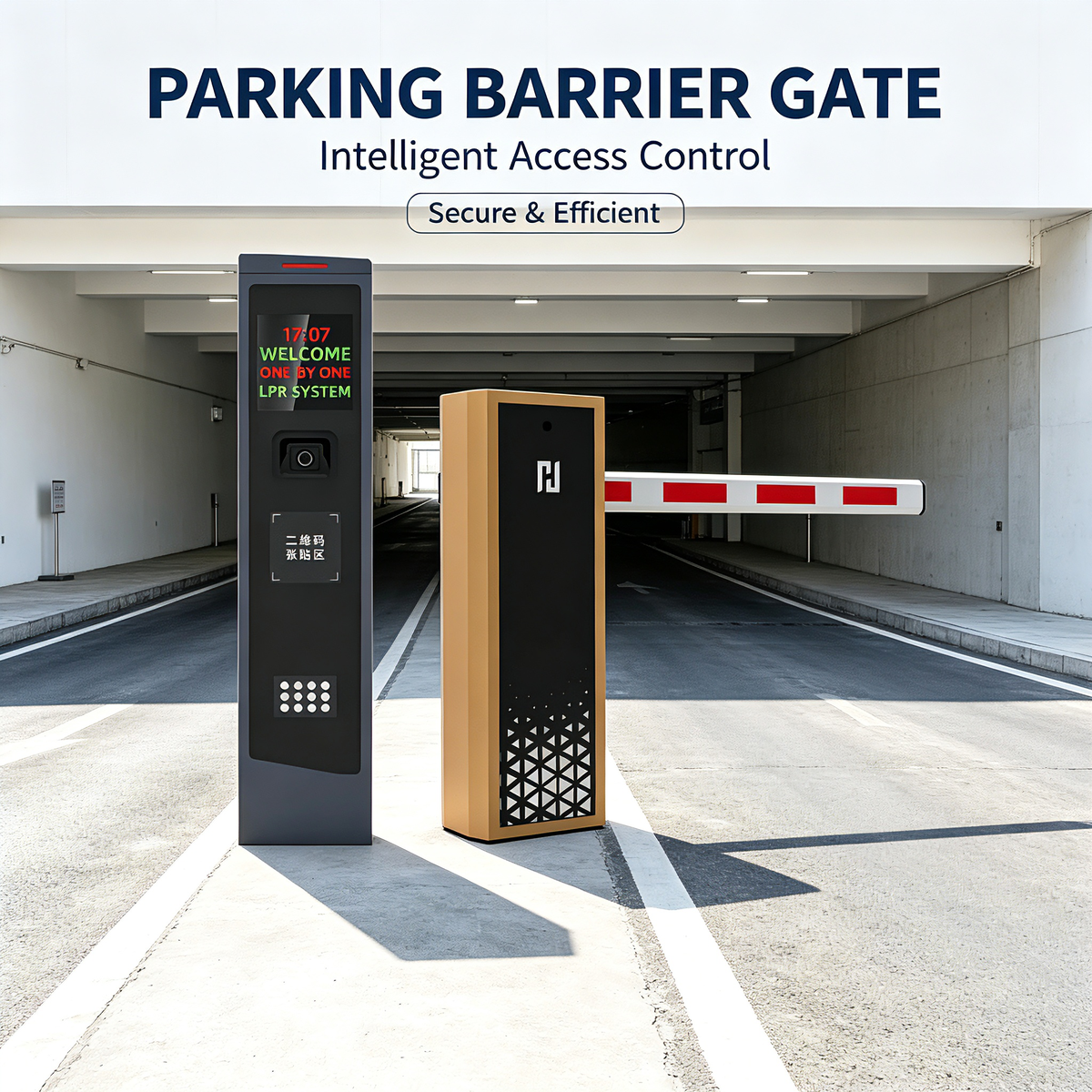
An ANPR parking barrier system combines a physical vehicle barrier with a camera-based number plate recognition system and access-control logic. ANPR stands for Automatic Number Plate Recognition. Product literature may also use LPR (Licence Plate Recognition) or ALPR (Automatic Licence Plate Recognition); in the UK, ANPR is the usual term for systems that read vehicle registration marks.
The barrier controls the lane; the ANPR equipment identifies the vehicle. The controller or parking-management platform then decides whether the recognised registration may enter or leave. Depending on the installation, that decision may rest on an authorised vehicle list, a time-limited permit, a visitor booking, a payment status or another rule defined by the operator.
A camera on its own does not turn a barrier into an ANPR system. The camera, recognition software, controller, barrier drive and any parking-management software must exchange the right signals or data. Compatibility should be confirmed for the actual model combination before purchase — not assumed from a product category description.
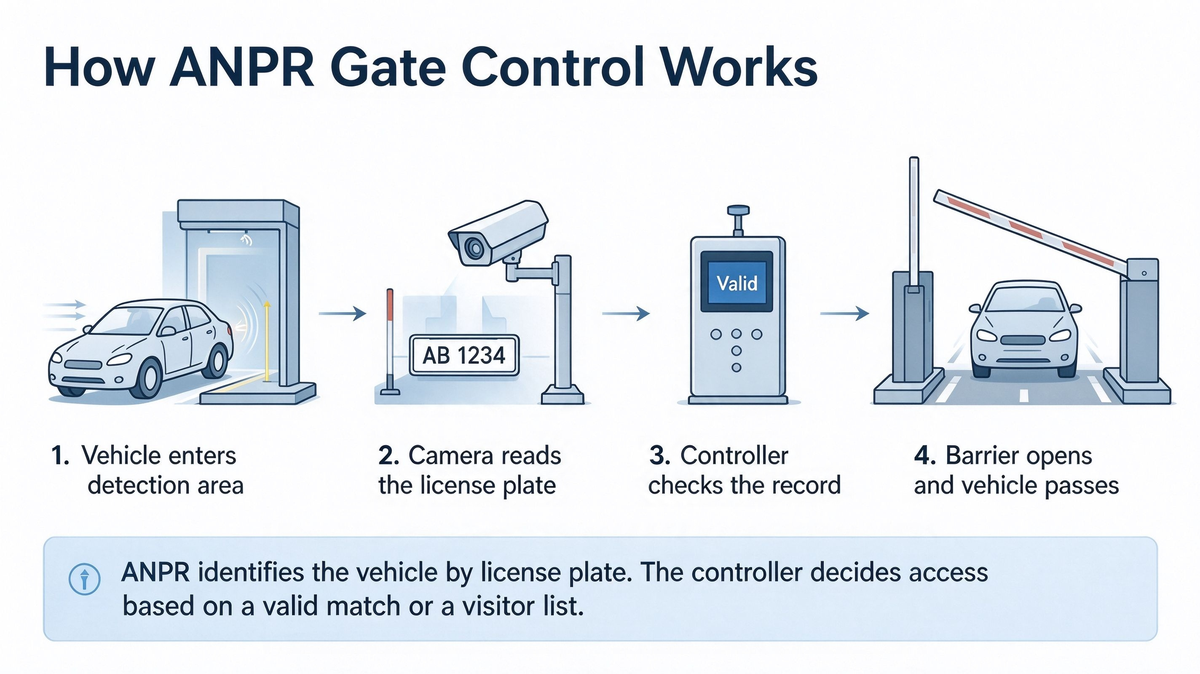
A typical system follows a straightforward sequence. The detail varies by supplier and configuration, so the installer should document the actual sequence for every entry and exit lane on the site.
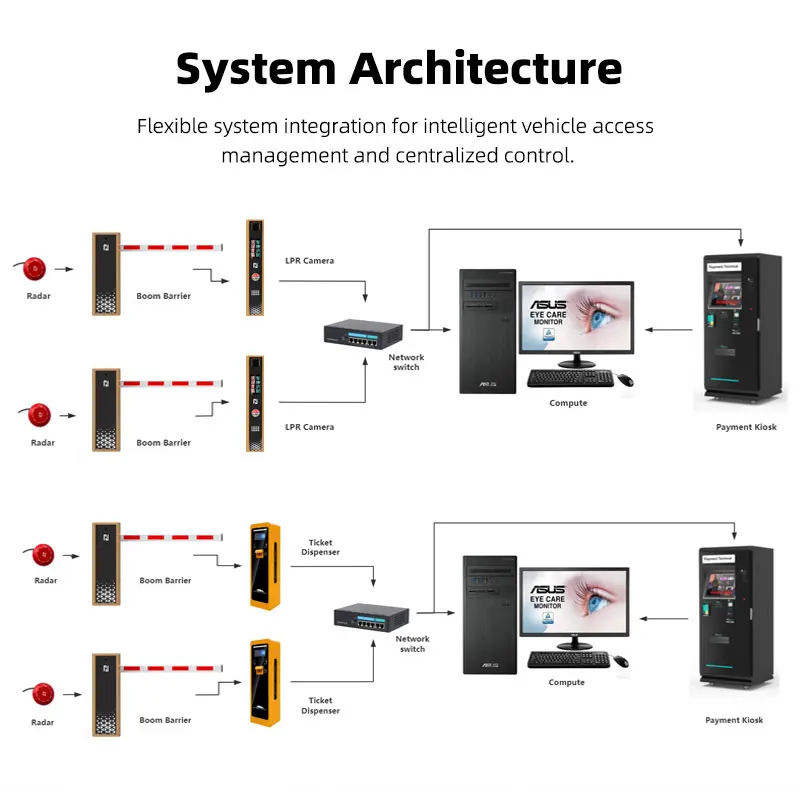
The final bill of materials depends on the number of lanes, traffic demand, access policy and the required level of automation. A common installation includes the four elements below, and each one carries its own specification questions.
The boom barrier physically controls vehicle movement through the lane. Specify the clear lane width, arm type and length, expected operating frequency, opening and closing requirements, mounting conditions and available power supply. A barrier intended for frequent commercial use should be selected against the real duty cycle, not just its headline opening speed.
Confirm which control inputs and interfaces are available on the exact barrier model. Depending on the product, integration may use a relay output or a supported interface such as RS485, Wiegand or TCP/IP. Do not assume that every model in a range supports every protocol — ask for the interface list for the model being quoted.
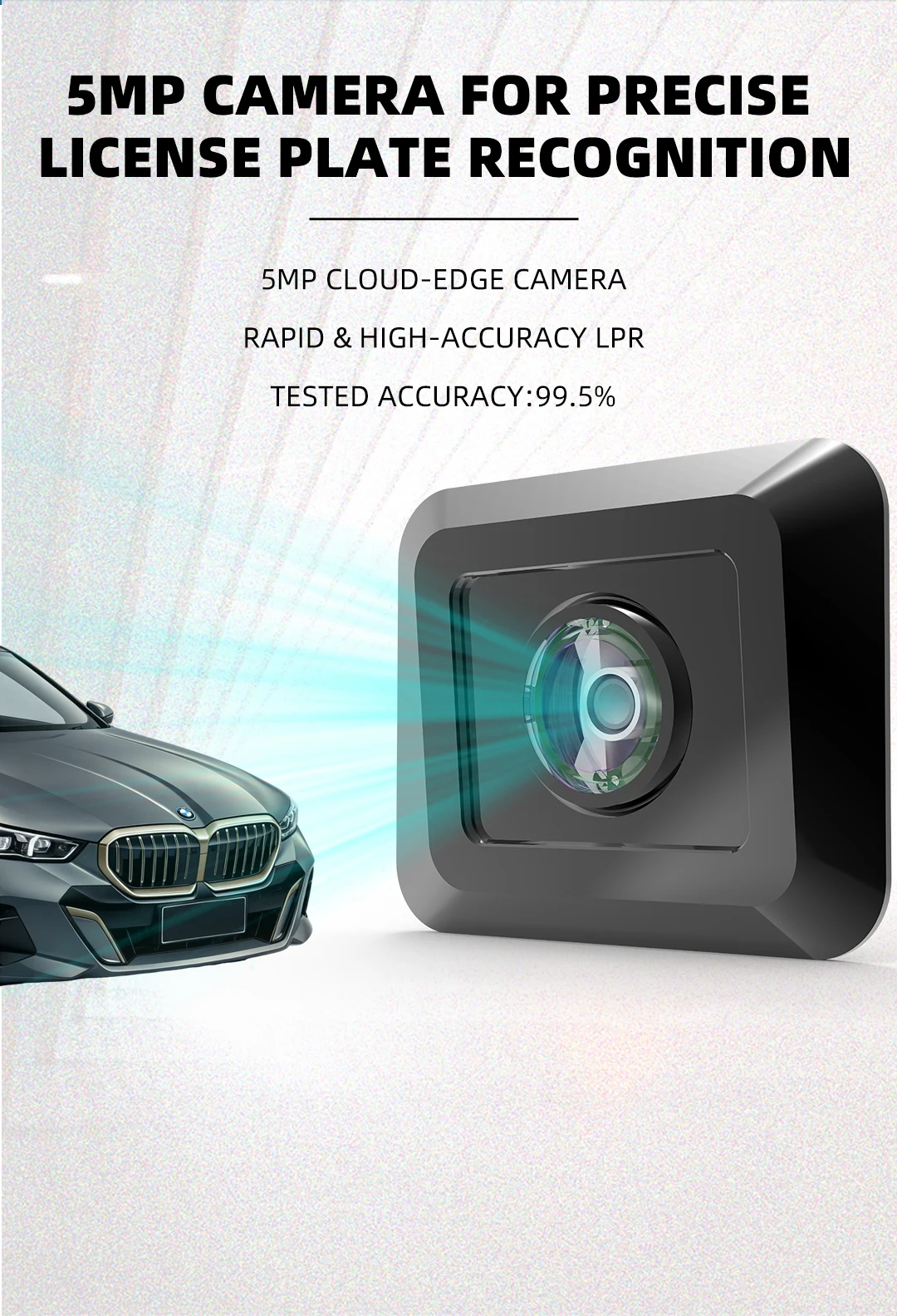
The ANPR camera must suit the site’s lighting, mounting position, lane width, vehicle speed and expected number plate types. Recognition performance is affected by glare, darkness, rain, dirty or damaged plates, steep camera angles, tailgating and poor lane discipline.
Ask the supplier to explain the recommended camera position, lighting or infrared requirements, supported plate formats and how uncertain reads are handled. Do not rely on an advertised recognition percentage without checking the test conditions and how closely they match the real site.
The controller applies the access rules and sends the opening command. A wider parking-management platform may handle vehicle registration, visitor access, permits, payment validation, event logs and reporting. Decide which system is the source of truth for permissions, and document how updates are synchronised between systems.
For an existing site, ask whether the ANPR solution can connect to the current access-control or parking system. Confirm the required hardware interfaces, network arrangements, software licences and any third-party integration work before placing the order.
Radar sensors, inductive loops, photocells and other compatible devices may be required to detect a vehicle, monitor a protected zone or support safe barrier operation. Their exact purpose depends on the equipment and the risk assessment. Number plate recognition is an identification function; it is not a substitute for physical safety detection.
The installer should test the complete system, including vehicle detection, barrier closing behaviour and the response to faults. The site operator should know what to do if the camera, network, controller or barrier fails — and that procedure should exist before the first busy morning, not after it.
ANPR can allow registered staff and tenant vehicles to enter without presenting a card at every visit. Visitor access can be handled through pre-registration, reception approval or an intercom fallback, depending on the system design. A clear process is needed for temporary vehicles, replacement cars and expired permits — these exceptions consume more management time than the routine traffic does.
ANPR can support ticketless entry and exit or help associate a vehicle with a parking session, where the software and payment equipment support that workflow. The operator should define how the system handles free parking periods, validation, payment disputes and vehicles whose plates cannot be read.
For residents with registered vehicles, ANPR may reduce the need for physical access cards. Resident permissions, visitor entry, delivery drivers, emergency access and privacy notices still need to be managed. A recognised number plate should only trigger the access decision defined by the site’s policy — recognition is not the same thing as authorisation.
At industrial sites, the system may need to distinguish between staff cars, contractors, vans and heavy goods vehicles. Check whether camera placement, lane geometry and barrier configuration suit the vehicle types using the entrance. Where vehicle throughput is high, specify the duty cycle and queue-management arrangements with the supplier.
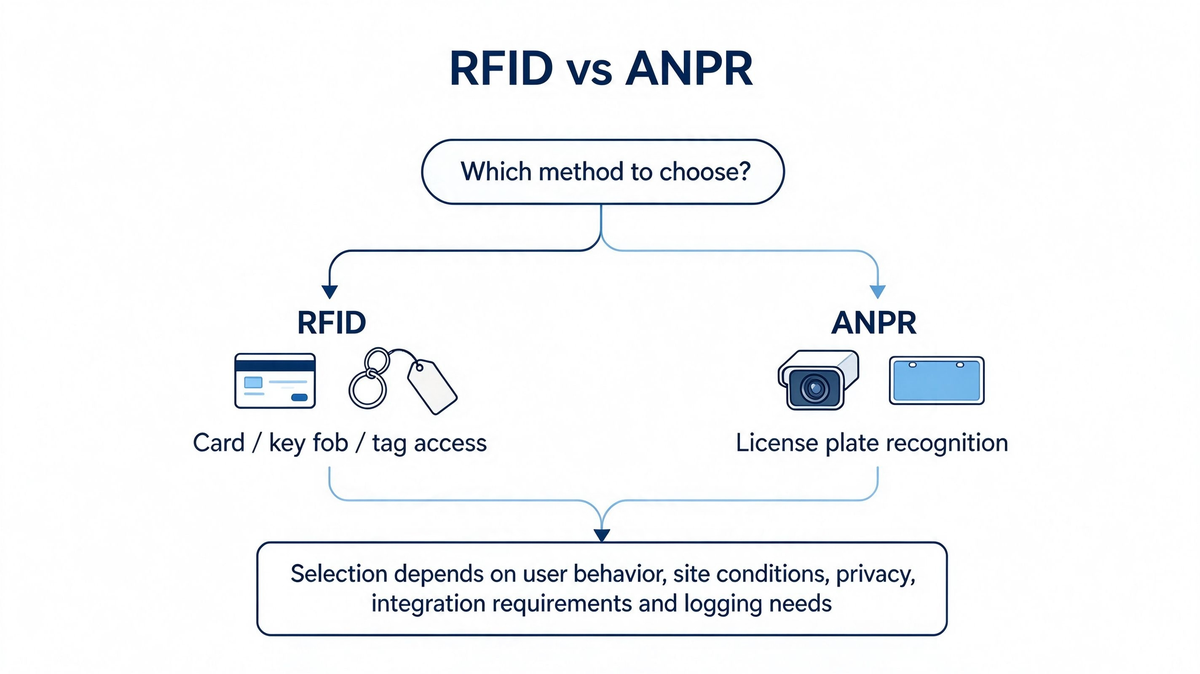
ANPR and RFID solve related but different identification problems. ANPR reads the number plate, while RFID reads a compatible card, fob or vehicle tag. Some sites use both — for example ANPR for registered vehicles and RFID as an alternative for authorised users, or for circumstances where plate recognition is unsuitable.
| Consideration | ANPR | RFID |
|---|---|---|
| What it identifies | Vehicle registration plate | Compatible card, fob or tag |
| Driver action | Usually no card presentation is needed | The credential may need to be presented or detected |
| Site dependencies | Camera view, lighting, plate condition and software | Reader compatibility, credential management and reading range |
| Typical management tasks | Plate registration, exceptions and vehicle-record policies | Issue, replace and revoke cards or tags |
There is no universal winner. Choose on access policy, site environment, user behaviour, integration requirements, privacy considerations and the cost of ongoing administration. If the site needs both methods, confirm how duplicate permissions, fallback access and event records will be handled — otherwise two valid systems can produce contradictory decisions in the same lane. Baroxon UK lists both RFID barrier options and ANPR number plate recognition systems so that the two can be specified against the same lane layout.
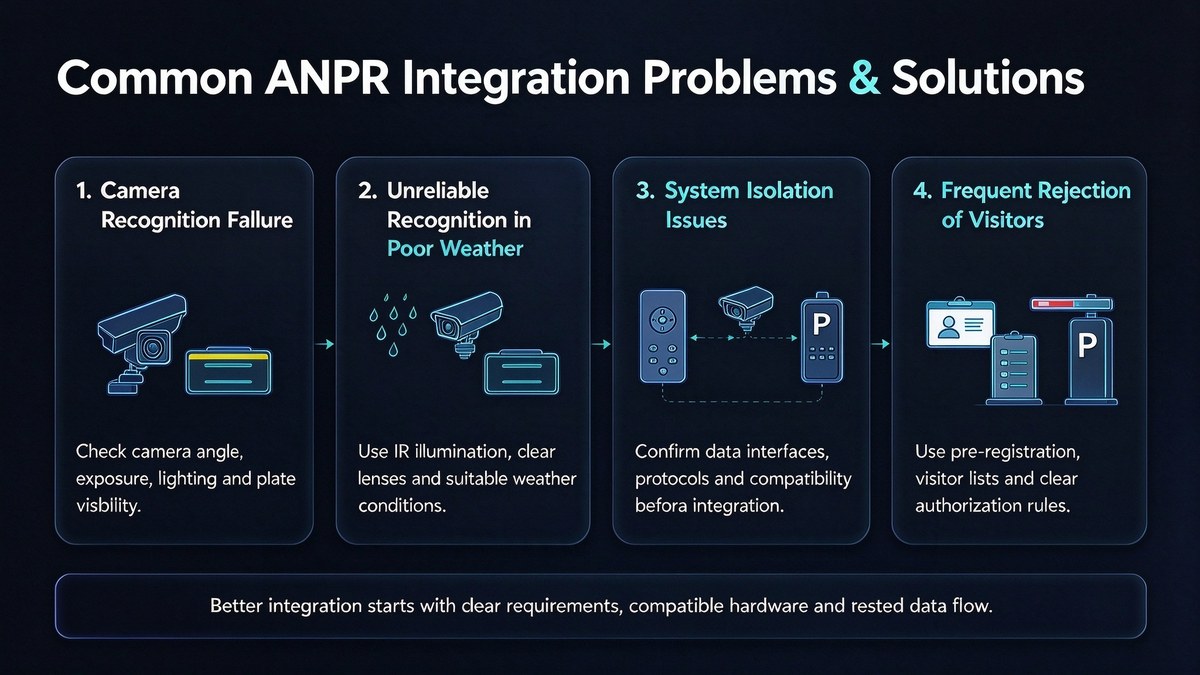
The barrier does not open after a successful plate read. The camera may have recognised the plate, but the access rule may reject it or the controller may not receive the release signal. Check the permission list, event logs, output configuration and wiring with the installer. In most cases the fault sits between the software decision and the barrier input, not inside either one.
Recognition is unreliable at night or in poor weather. Review the camera angle, exposure, lighting, infrared illumination, lens condition and vehicle position. Test using representative UK plates and real site conditions rather than relying on a demonstration in ideal lighting.
The system works in isolation but not with existing software. The camera, controller and parking platform may use different interfaces or data formats. Agree the integration responsibilities, supported protocols, network requirements and acceptance tests before installation, and put them in writing.
Visitors or temporary vehicles are frequently rejected. Create a documented exception process, such as pre-registration, reception approval or intercom verification. Define who can authorise access and how that decision is recorded, so that the answer does not depend on which member of staff is on duty.
Before installation, carry out a site-specific assessment of vehicle and pedestrian movements, visibility, queueing, emergency access and the risks associated with moving barrier arms. Select and position safety devices for the actual installation, and ensure that commissioning includes functional tests and operator training. The required design and documentation depend on the equipment, application and project requirements.
ANPR may process information that relates to identifiable people when combined with other records. UK operators should consider applicable data-protection obligations, provide appropriate privacy information, restrict access to records, define retention periods and document the purpose of processing. Obtain appropriate legal or data-protection advice for the specific deployment rather than assuming that fitting a camera makes the process compliant.
Ask the supplier to confirm the exact barrier model, arm length, operating frequency, camera compatibility, interface options, power requirements, environmental rating, available safety accessories, warranty and maintenance arrangements. For any required UKCA/CE marking or specified British Standard, request the relevant documentation for the precise model and installation before ordering.
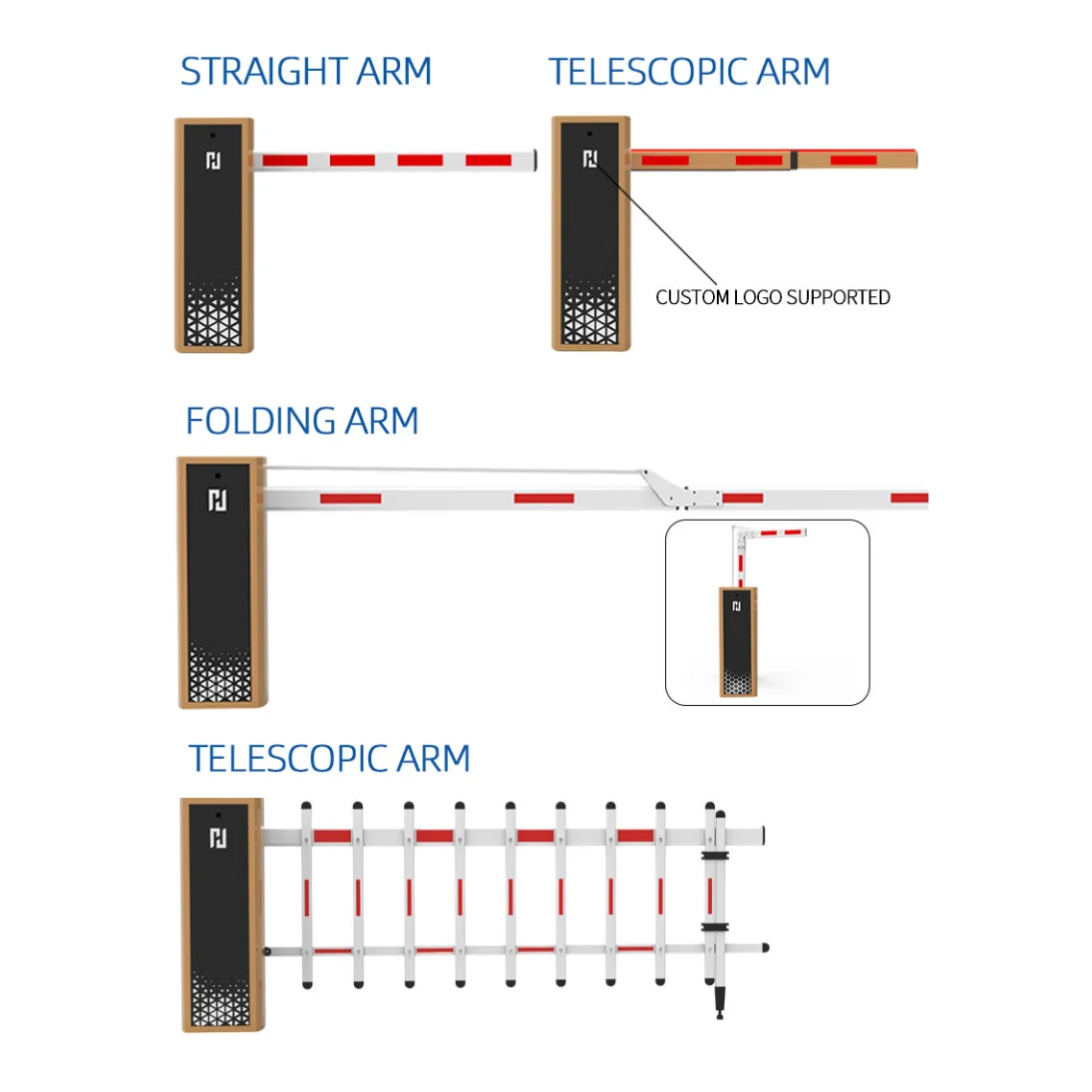
Not automatically. The barrier must have a suitable control input or supported interface, and the ANPR camera or software must be able to send a compatible release request. Confirm compatibility for the exact models and integration method. A barrier with a dry-contact release input can usually be triggered by an ANPR controller, but the wider behaviour — logging, anti-tailgating, loop logic — depends on the controller.
It can, if the system is configured to grant access after a successful recognition and authorisation check. A plate read alone should not be treated as permission unless the site’s access policy explicitly allows it. For pay-on-exit sites, the barrier may only open after payment validation rather than recognition alone.
ANPR systems can be configured for supported vehicle registration formats, but performance depends on the camera, software, plate condition, lighting and installation. Ask the supplier to confirm supported UK plate formats and test the equipment under site conditions, including the oldest, dirtiest and most angled plates that realistically pass through the lane.
The system should follow a defined exception process. Options may include intercom assistance, reception approval, a temporary access code or an authorised RFID credential. The right method depends on the site’s security policy and operating model, and the fallback should be tested as part of commissioning.
Yes, provided the controller and software support the required combination. A site might use ANPR for registered vehicles and RFID for selected users or as a fallback, but the access rules should prevent conflicting permissions and ensure that events are recorded consistently.
Often, yes. ANPR identifies a vehicle but does not replace the safety functions of appropriate vehicle detectors or protective devices. The installer should specify the required detection and protection arrangement for the barrier and lane, and confirm that the barrier cannot close on a vehicle that is still under the arm.
Ask for the exact model numbers, supported interfaces, ANPR compatibility, expected duty cycle, arm length, camera requirements, safety-device arrangement, installation scope, commissioning tests, maintenance plan, warranty and relevant conformity documentation. Request a written confirmation of the proposed system architecture — a simple diagram showing which device talks to which is worth more than a page of product claims.
A parking barrier can work effectively with number plate recognition when the ANPR camera, recognition software, access controller, boom barrier and vehicle detection equipment are specified as one compatible system. The result is a more convenient way to manage authorised vehicles, less reliance on physical tickets or cards, and a record of access events where one is required.
For a UK project, start with the site layout, traffic demand, access rules, existing systems, safety requirements and data-protection process. Baroxon UK lists automatic boom barriers for car park access control, ANPR/LPR car plate systems, an automatic boom barrier with ANPR camera, RFID vehicle access control and vehicle detection radar. You can see how these are combined in commercial parking access control projects, and request an ANPR barrier specification against your lane layout and access policy before finalising the order.
Key takeaways:

 WhatsApp: +8613405313100
 Scan to add our export desk