Short answer: the main types of automatic parking barriers are straight-arm boom barriers, folding-arm barriers, high-speed barriers, long-arm or wide-lane configurations, and barriers combined with an access-control method such as RFID or ANPR. These are not exclusive categories — a straight-arm barrier can also be a high-speed unit, and any of them can be RFID-controlled. The right choice is decided by clear lane width, available headroom, peak traffic, required opening time, vehicle mix and the access-control process at the entrance, not by appearance or by the fastest quoted cycle.
Automatic parking barriers control vehicle access by raising and lowering a barrier arm, or by moving another powered blocking mechanism across the lane. In the UK they are installed at car parks, residential developments, offices, business parks, hospitals, retail sites, industrial premises and logistics yards. The same entrance may need a different configuration in five years, so it is worth understanding the options before the first quotation is requested.
Buyers often use the terms automatic parking barrier, boom barrier and boom gate interchangeably. In practice, barrier systems differ in arm design, operating speed, duty rating and integration options. This guide sets out each type, what it suits, what to check, and how to compare them without relying on marketing descriptions alone.
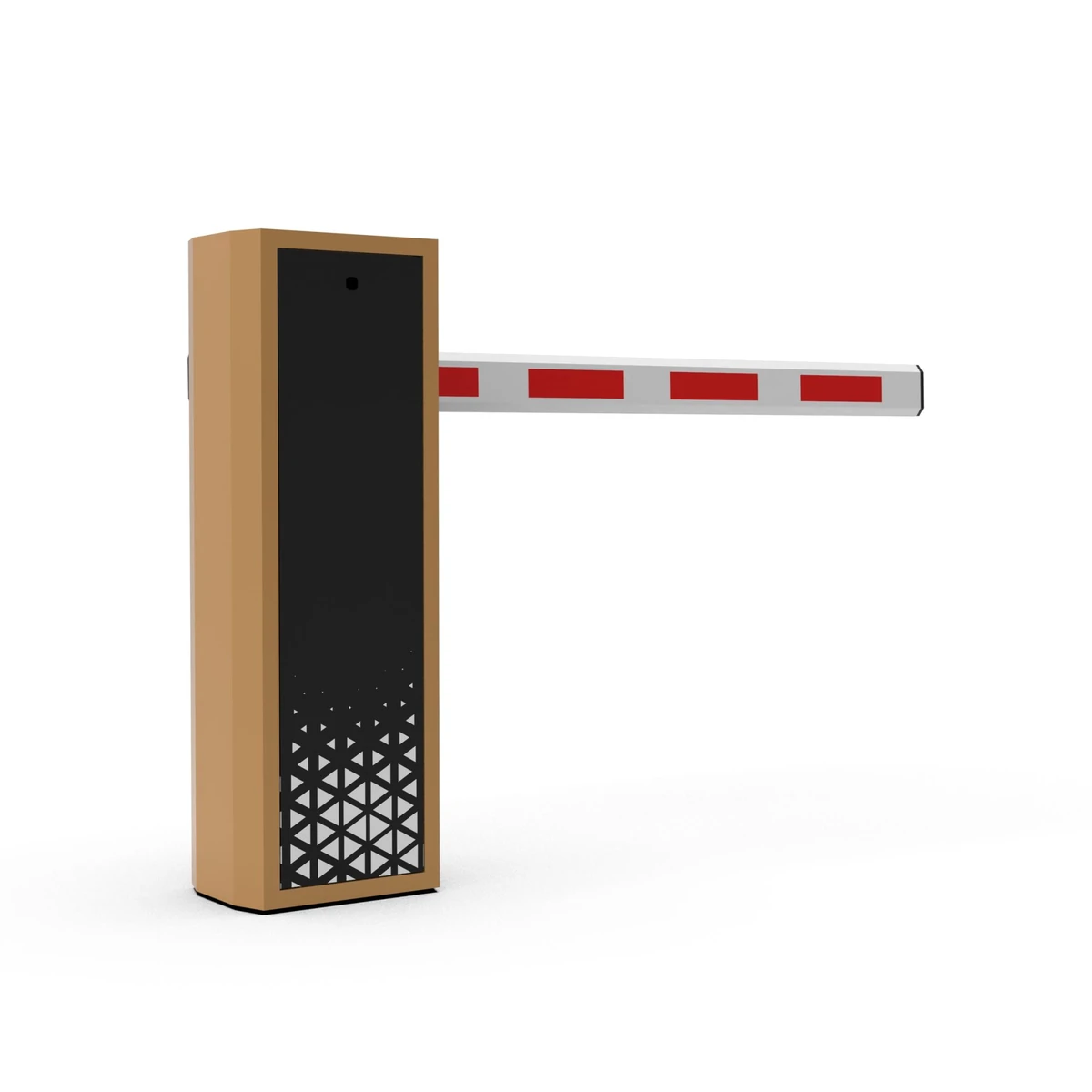
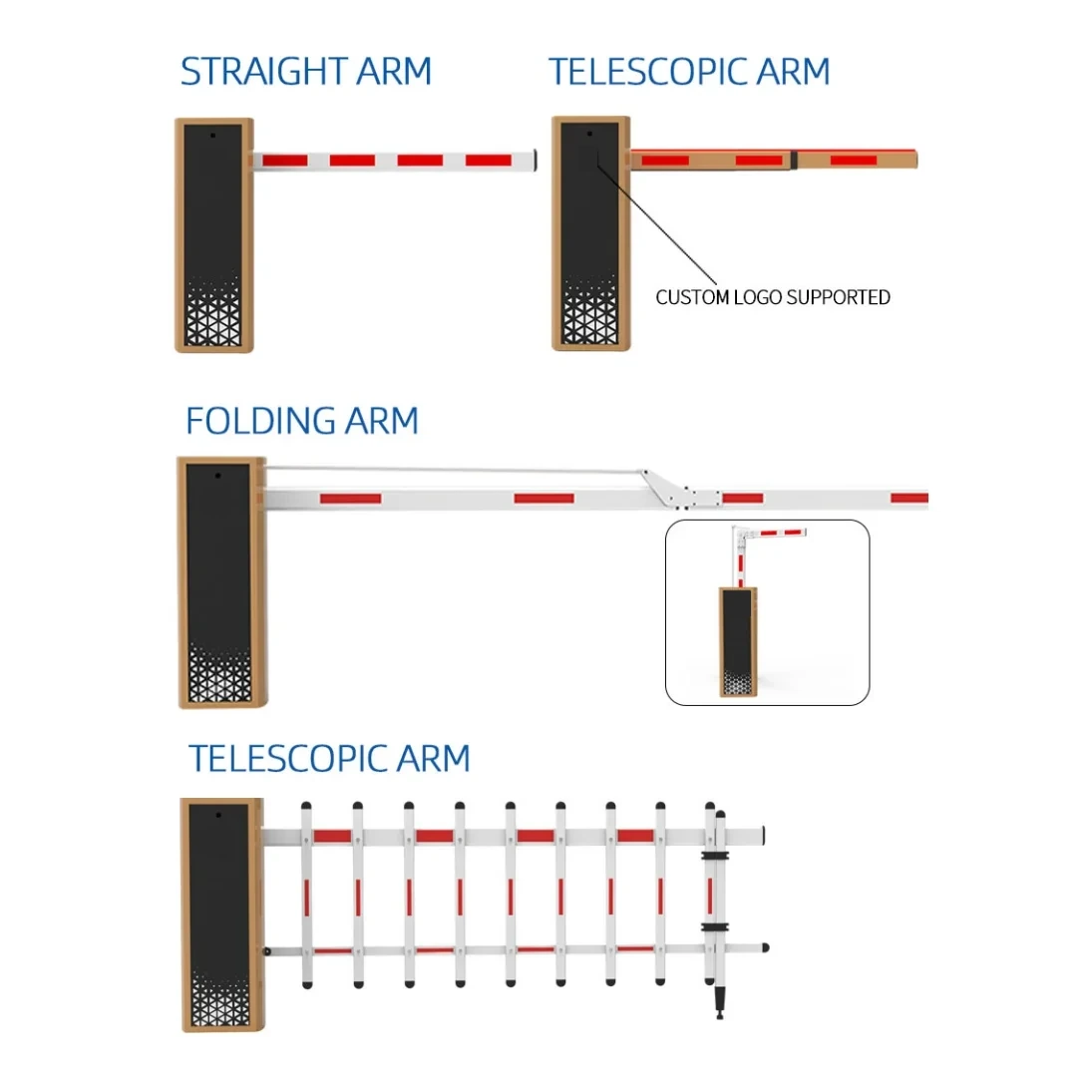
A straight-arm boom barrier uses a single arm, normally horizontal at rest, that rises to let authorised vehicles through and lowers to close the lane. It is the most common configuration at standard car park entrances, apartment developments, office sites and controlled vehicle lanes where there is enough vertical clearance for the arm to travel through its full arc.
This type is worth considering when the entrance geometry is straightforward and the required lane width falls within the manufacturer's supported arm-length range. Before a model is selected, measure the clear opening and check kerbs, islands, posts, pedestrian routes, turning space and the position of the cabinet. A longer arm is not automatically the better answer: past a certain length, deflection, wind loading and the risk of striking nearby objects all increase, and the drive and foundation have to be specified for that load.
Practical checks for a straight-arm lane:
A folding-arm barrier uses a jointed arm that folds as the barrier opens. The configuration exists for basement car parks, covered entrances and sites under a canopy, bridge or building overhang, where a conventional straight arm would not have the overhead clearance to rise fully.
Select a folding-arm unit against the real ceiling height and the full movement envelope of the arm, not against the height shown in a product photograph. Check the folded-arm clearance and everything the arm could meet on the way: lighting, pipework, signage, sprinkler equipment, cable trays and the roof height of the vehicles using the lane. Confirm the supported arm length and operating settings with the supplier, and make sure the installation instructions match the site conditions.
Two details are often missed on folding-arm projects. First, the folded arm still occupies space above the lane, so low vehicles and roof bars can be at risk if the hinge point is set too low. Second, a folding arm carries more moving parts than a straight arm, which makes hinge inspection and lubrication part of the routine maintenance plan rather than an optional extra. The automatic folding-arm barrier page sets out the configurations available for restricted-headroom sites.
High-speed barriers are designed for entrances where waiting time and vehicle flow are the priority. They are usually considered for busy commercial car parks, logistics facilities, business parks and other high-throughput locations. The appropriate opening and closing time depends on the exact model, arm length, controller settings, safety devices and the traffic conditions at the site.
Speed should not be the only selection criterion. A very fast cycle is unnecessary at a low-volume residential entrance, while a busy site may need the access credential recognised before the vehicle reaches the arm — otherwise the barrier opens late and the speed advantage disappears. Review peak-hour traffic, queue storage, safe stopping distance, rated duty cycle and the consequences of the barrier being out of service for a day. Ask the supplier to confirm the tested operating range for the proposed configuration, not for the product family.
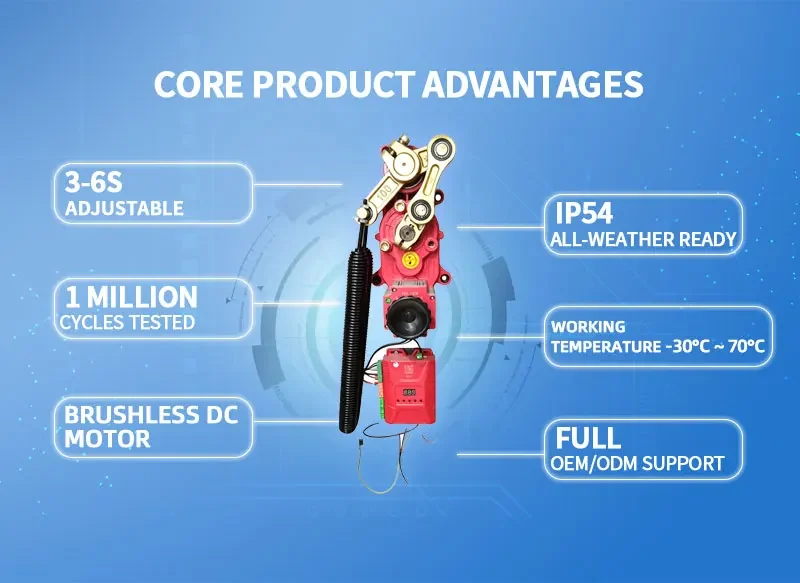
A high-speed barrier also changes the safety design. Faster arm movement reduces the time available for a driver to react, so detection devices, warning lights and the controller logic have to be matched to the cycle. Where the entrance is also used by pedestrians, the segregation arrangement becomes part of the speed decision. The high-speed barrier gate range covers the models used for high-throughput lanes.
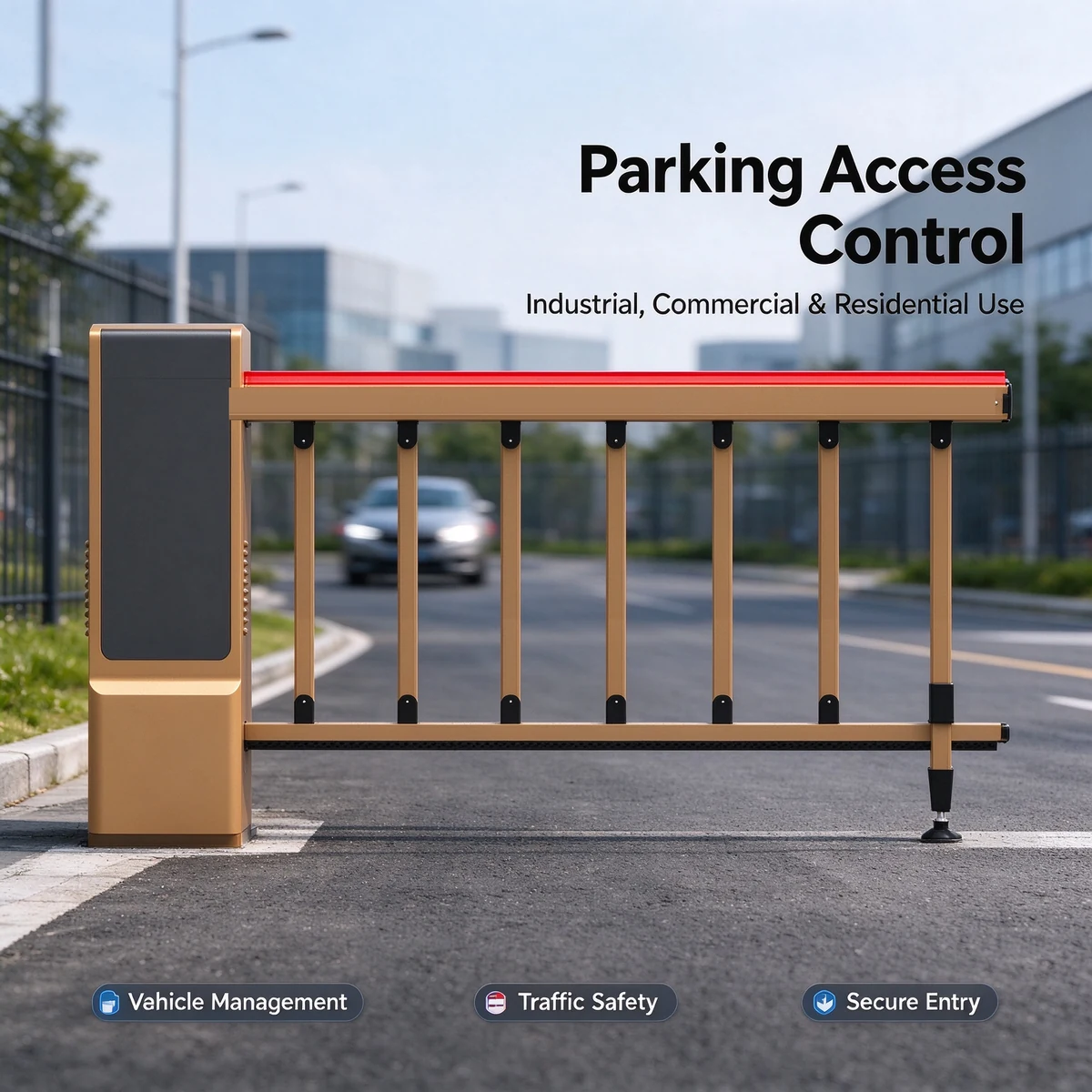
Long-arm and wide-lane configurations are intended for entrances with a larger clear span, within the limits of the selected model. They may be relevant to industrial premises, logistics yards, multi-lane approaches and vehicle entrances where a standard short arm would not cover the opening. Some ranges also offer telescopic or adjustable arms, but availability and limits must be checked against the exact product specification.
A wide opening needs more than a longer arm. Check arm balance, wind exposure, support arrangements, visibility, foundation requirements and the way vehicles approach and turn through the lane. If the entrance serves HGVs or coaches, confirm the swept path and turning envelope, and check that the barrier is compatible with the access-control method planned for that lane. Ask the supplier to confirm the maximum supported span in writing rather than inferring it from a photograph.
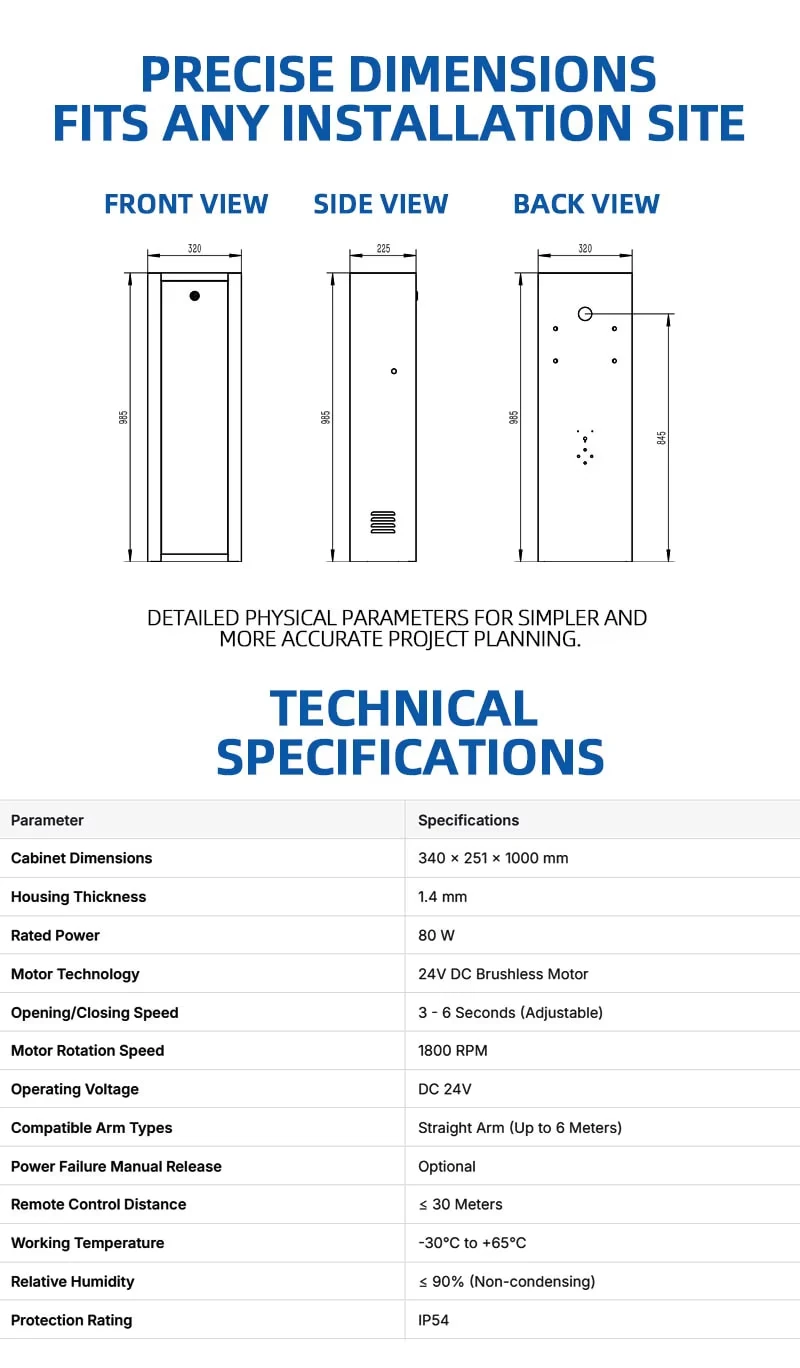
Long arms also change what happens when a vehicle strikes the arm. The arm itself, the hinge assembly and the foundation all carry a larger load, and a bounce-back or break-away arrangement is worth discussing with the supplier for exposed or high-risk lanes. On industrial sites, a barrier is often only one part of the entrance — weighbridges, height restrictors, gatehouses and traffic lights all affect how the lane has to work.
An RFID boom barrier is not usually a different arm design. The term describes a boom barrier integrated with radio-frequency identification credentials or readers, where an authorised vehicle is identified by a tag or card and the controller issues an opening command. It suits residents, staff, fleet vehicles and other registered users who need repeat access without stopping at a ticket machine.
Before ordering, confirm the reader type, reading distance, credential management, controller inputs and compatibility with the existing access-control software. Reader placement matters: a vehicle should be identified at a point that does not encourage tailgating and does not leave a queue standing in a live traffic lane. For sites that need more than RFID, the barrier can also work with ANPR/LPR cameras, intercoms or a parking management platform, subject to model-level compatibility.
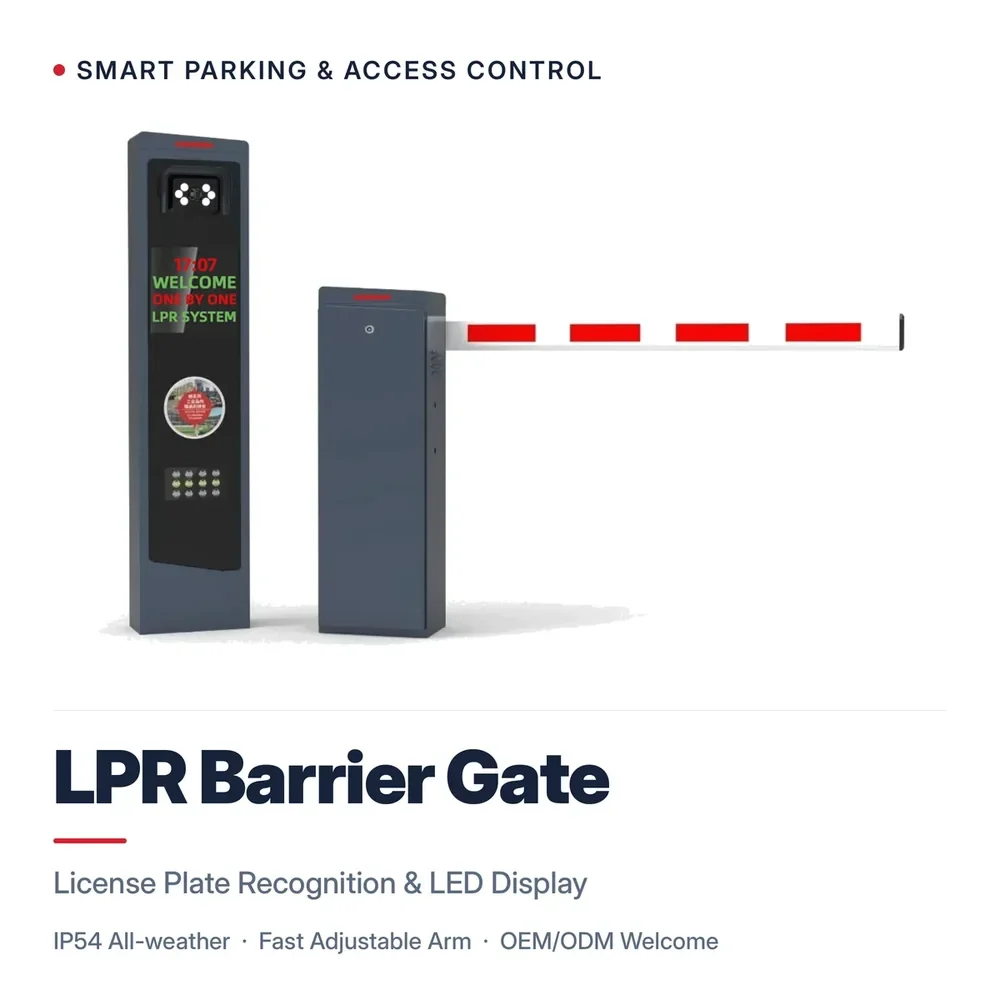
Integration is where most access-control projects fail quietly. The barrier, the reader and the software may each work correctly on their own while the combined system does not, because the interface was never tested end to end. Ask for the interface specification, confirm who is responsible for commissioning, and agree in advance what happens when the network is down, a credential is lost or a plate cannot be read. A lane that fails closed without a documented manual procedure will cause a queue within minutes on a busy site.
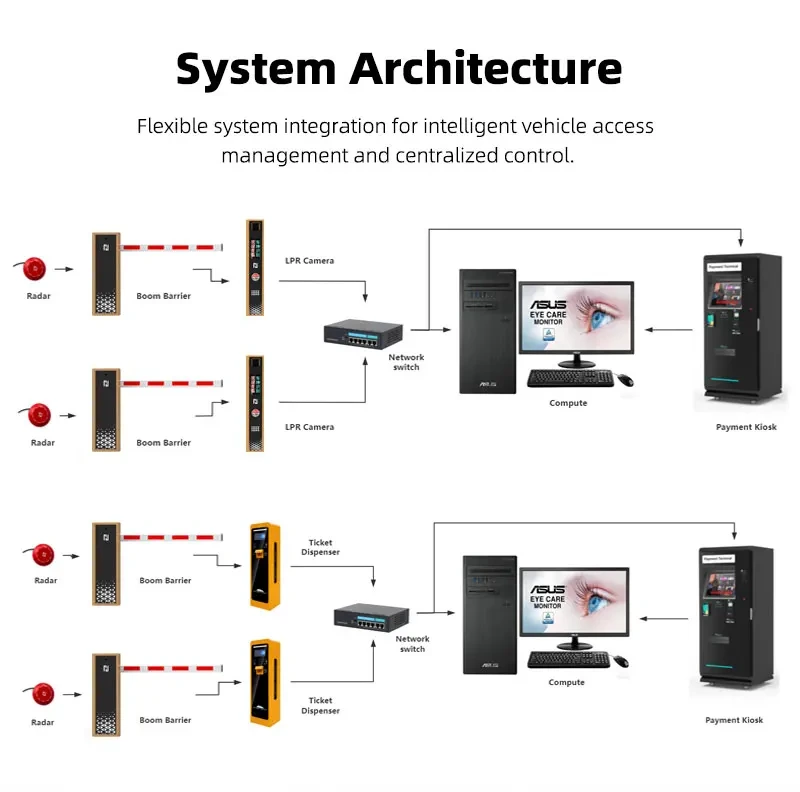
The access method also determines throughput. A card reader adds a stop-and-present step; an ANPR lane may allow a slow roll-through; a ticket machine adds the time taken to take, keep and later pay for a ticket. If the barrier cycle is fast but the credential process is slow, the queue is caused by the process, not the barrier. The ANPR and LPR car plate recognition system pages describe the camera and software options used with these lanes.
The practical way to compare automatic parking barriers is to start from the site requirement, then match the physical configuration and control features to it. The table below is a starting point only: confirm model-specific dimensions, speeds, duty ratings and options with the supplier before an order is placed.
| Barrier type | Best suited to | Main checks |
|---|---|---|
| Straight-arm boom barrier | Standard car parks, offices and residential entrances | Clear lane width, arm length, headroom and traffic volume |
| Folding-arm barrier | Basement or covered entrances with restricted headroom | Ceiling clearance, folded-arm envelope and nearby services |
| High-speed barrier | Busy entrances where queue reduction is the priority | Tested cycle time, duty rating, safety arrangement and queue layout |
| Long-arm or wide-lane configuration | Wider entrances and selected industrial or logistics sites | Maximum supported span, arm balance, wind exposure and turning path |
| RFID or ANPR-integrated barrier | Registered residents, staff, fleet or season-ticket access | Reader range, credentials, controller compatibility and fallback procedure |
The categories overlap, and that overlap is normal. A straight-arm barrier may also be a high-speed model; a folding-arm barrier may be RFID-controlled; a long-arm unit may sit on a lane with ANPR. What matters is that the arm geometry, drive, detection and access method are specified as one system rather than chosen separately from four different catalogues.
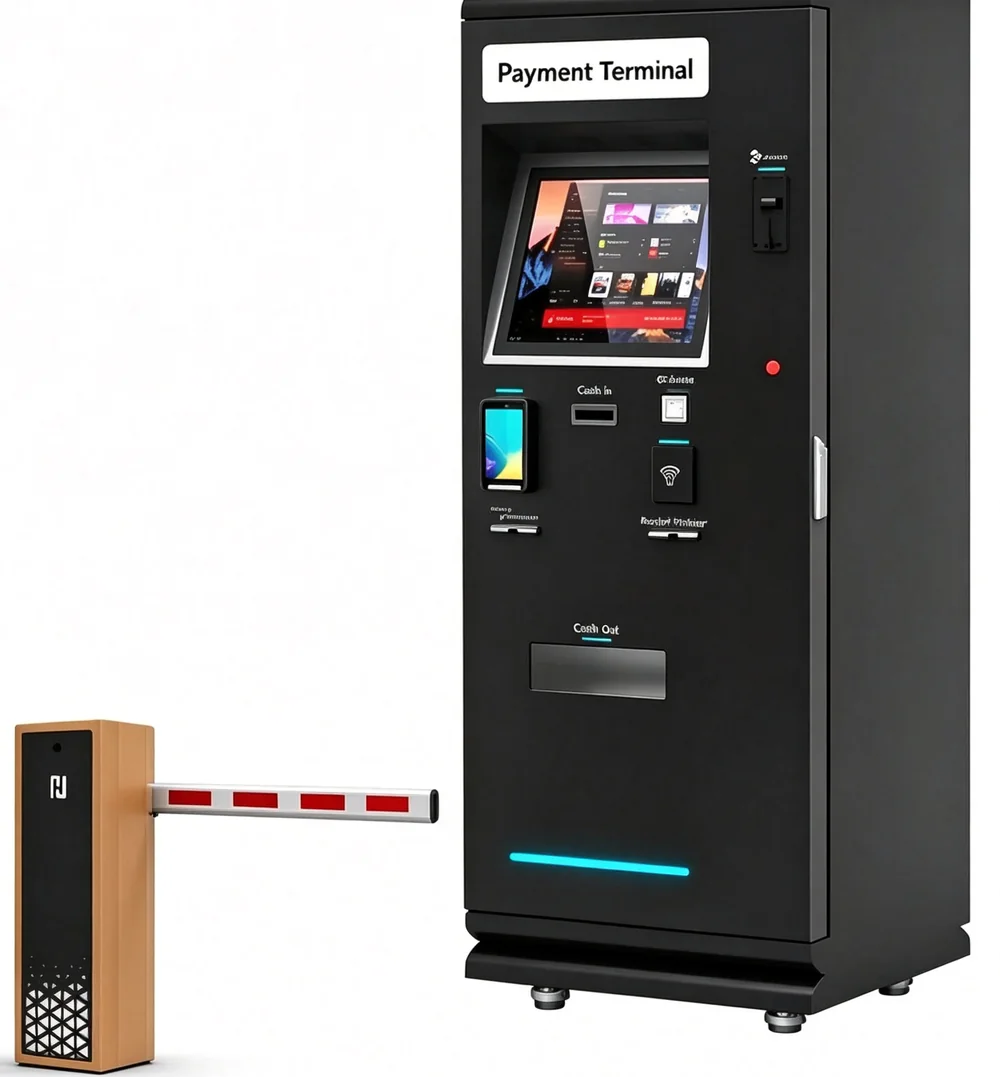
Most specification errors are visible before the order if the right questions are asked. The list below is a workable checklist for a UK car park or vehicle entrance.
| Topic | Question to ask |
|---|---|
| Arm and span | What is the maximum arm length for this model, and what wind load is it rated for at that length? |
| Duty cycle | What is the rated duty cycle and tested cycle count for this drive? |
| Speed | What opening and closing time is achieved with the arm length proposed for this lane? |
| Detection | Which safety devices are required for this configuration, and how are they tested at commissioning? |
| Environment | What enclosure rating and operating temperature range apply to the exact model? |
| Integration | Which interfaces are available, and what happens to the lane during a network or power failure? |
| Installation | What foundation, power supply and cable route are required? |
| Support | What warranty, spare-part and response terms apply after handover? |
Send the supplier the site location, clear lane width, available headroom, peak traffic estimate, vehicle types, preferred access method, existing controller details and any site-specific safety requirement. A photograph of the entrance and a simple plan are usually enough to turn a generic quotation into a specification that can be checked. Our heavy-duty parking barrier buying guide covers the commercial side of the same decision in more detail.
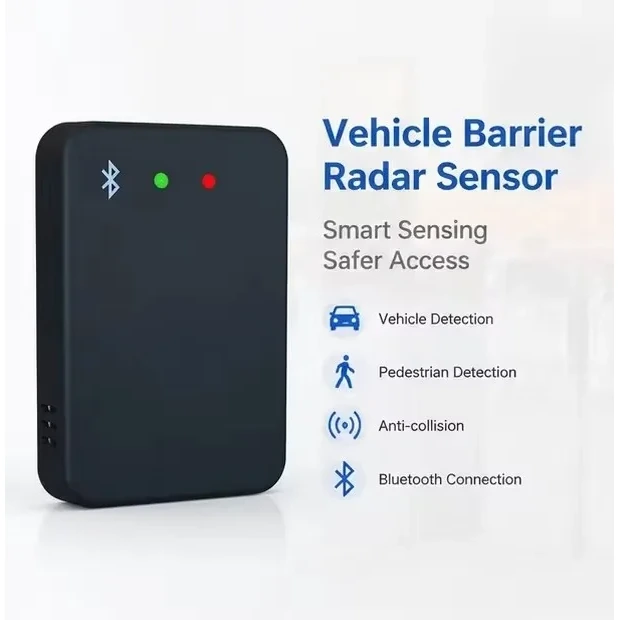
Whichever type is chosen, the barrier has to be installed as part of a complete vehicle-access arrangement. Depending on the design and the site risk assessment, the installation may require radar vehicle detection, induction loops, photocells or other protective devices. These devices do different jobs and should not be treated as interchangeable without a competent assessment. Ask the installer to document the detection arrangement, the operating logic, the emergency release procedure and the commissioning tests.
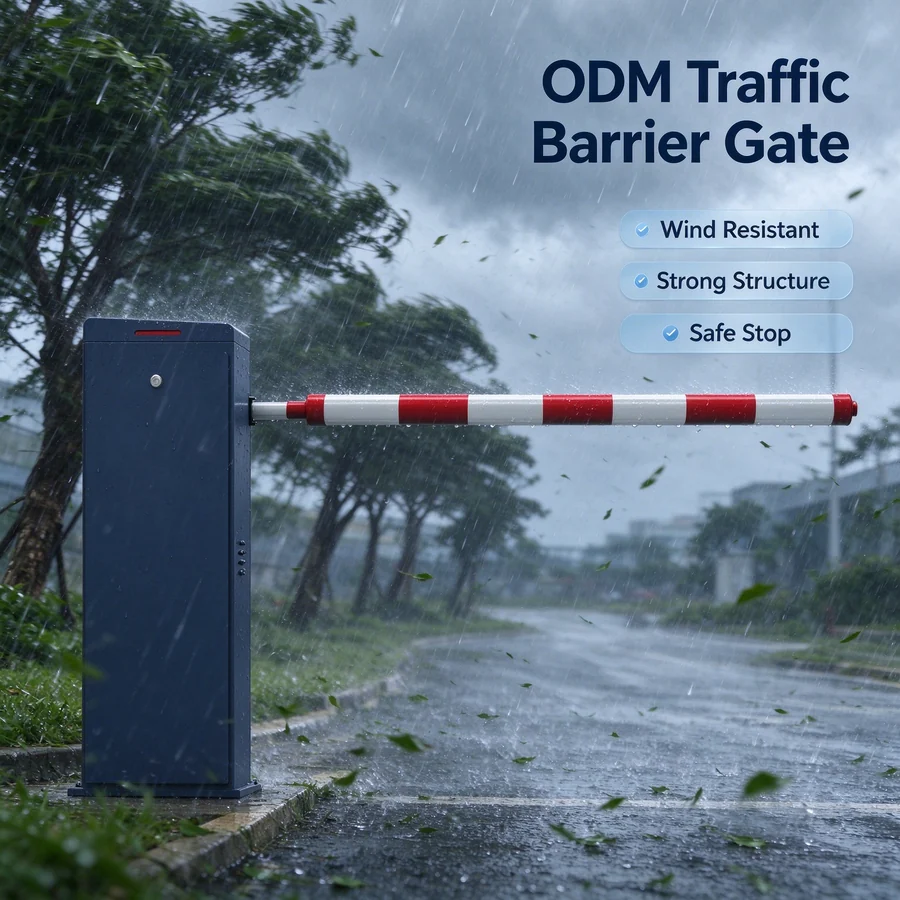
For UK sites, consider rain, standing water, temperature changes, road spray, low winter light and the mix of vehicles using the entrance. Confirm the environmental rating and installation requirements for the exact model. A product marketed as weather-resistant is not automatically suitable for every exposed location, and a coastal or unsheltered site may need a different specification from a sheltered basement ramp.
A safe installation also needs suitable foundations, cable routing, visibility, signage and access for maintenance. The final design should let a vehicle stop and be authorised without blocking a public highway or forming an unsafe queue. Commissioning should test normal passage, pedestrian interaction and foreseeable fault scenarios before the barrier is handed over. Our parking barrier safety sensor guide sets out how the detection options differ.
A straight-arm boom barrier is the most common choice for standard vehicle entrances where there is enough overhead clearance and the required lane width falls within the model's supported range. The final choice still depends on site layout, traffic volume, safety design and the access-control requirement.
Consider a folding arm when the entrance is covered or in a basement and a straight arm cannot rise within the available headroom. Measure the full movement area, check the folded-arm clearance and confirm the supported configuration with the supplier before ordering.
No. Opening speed is only one part of performance. The barrier also has to match arm length, duty rating, detection, the access-control process and safe queue space. A faster barrier will not fix a queue caused by slow credential recognition or an unsuitable lane layout.
Usually not. RFID describes the access-control method rather than the physical arm design. An RFID reader can be integrated with a compatible automatic boom barrier provided the reader, controller and access software work together as specified.
Only within the limits of the selected arm length, drive and foundation, and usually with a wider lane and a longer arm than a car-only entrance. Confirm the maximum span, the swept path of the largest vehicle and the detection arrangement with the supplier before assuming one lane can serve both.
Provide the clear lane width, available headroom, traffic volume, vehicle types, operating hours, preferred access method, safety requirements, installation environment and any existing control system. Site photographs or a layout drawing help the supplier recommend a configuration that can actually be installed.
The main types of automatic parking barriers are straight-arm boom barriers, folding-arm barriers, high-speed models, long-arm or wide-lane configurations, and barriers integrated with access technologies such as RFID or ANPR. Because the categories overlap, the more useful question is not “which type is best” but “which combination fits this entrance, this traffic and this access process”.
Review the BAROXON UK automatic boom barrier range for the available configurations, and compare it with the high-speed barrier gate range where throughput is the priority. For a lane that also needs recognition or remote monitoring, review the ANPR and LPR system and the vehicle detection radar sensor range. Confirm the exact model specifications, arm options and controller compatibility before ordering, and request a written proposal that answers the questions in section 7.
This article is general guidance. It does not replace a site survey, a risk assessment, the manufacturer's instructions for the equipment installed, or legal advice on health and safety obligations.
For model-specific advice, contact BAROXON UK with the lane dimensions and access-control requirements, or start from the vehicle access control product range. For related reading, compare this guide with our smart parking access control overview and the parking barrier maintenance checklist.
Choosing a configuration is only half of the purchase. Before you commit to an order, work through our checklist of questions to ask a parking barrier supplier, which covers model selection, safety devices, integration, quotation terms, delivery and warranty.

 WhatsApp: +8613405313100
 Scan to add our export desk